Best Male Enhancement Supplement Plans Start With Sleep
Quick Answer: Do Sleep and Stress Really Affect Male Vitality?
Yes, and more reliably than anything sold in a capsule. When healthy young men were restricted to five hours of sleep a night for one week in a controlled study, their daytime testosterone fell by roughly 10 to 15 per cent, and it recovered when normal sleep resumed. No botanical in this category has produced a change that large, that fast, in that few people.
- Highest-yield lever: seven to nine hours, at consistent times, seven days a week.
- Second lever: chronic stress, which raises cortisol and disturbs sleep at the same time.
- Realistic timeline: mood and energy within a week or two; everything else, longer.
Almost every man who goes looking for the best male enhancement supplement has arrived there the same way. Energy has drifted down, drive has drifted with it, and the search engine offers capsules. It is a reasonable place to start looking, and it is the wrong place to start fixing, because the two variables with the strongest and fastest evidence behind them are free.
This piece is deliberately not about ingredients. It is about the foundation those ingredients are supposed to sit on, and about what the controlled research shows when that foundation is removed.

Why the best male enhancement supplement cannot outrun a sleep debt
Testosterone is not secreted evenly around the clock. In men it follows a daily rhythm, rising during sleep and peaking in the early morning, with the largest pulses tied to the deeper stages of the night. That single fact explains why sleep is not a lifestyle nicety in this conversation but the machinery itself. Cut the night short and you are cutting into the window in which most of the day's production happens.
It also explains a common and frustrating experience. A man takes a botanical formula for six weeks while sleeping six broken hours a night, feels nothing, and concludes the supplement was useless. It may well have been. But the experiment was never capable of producing a clean answer, because the largest variable in the system was moving the whole time.
What one week of short sleep actually did
The study worth knowing is Leproult and Van Cauter, published in JAMA in 2011. Healthy young men spent a week in a laboratory restricted to five hours in bed per night. Daytime testosterone dropped by something in the order of 10 to 15 per cent, and the men also reported lower vigour as the week went on.
Two honest caveats. The sample was small, as sleep laboratory studies almost always are, and the participants were young men rather than the middle-aged men most likely to be reading this page. What makes the result useful anyway is its direction and its speed: one week, a change of a size that supplement marketing would describe as dramatic, produced by nothing more exotic than a late alarm clock.
The reverse is the part people find harder to hear. Restoring sleep restores the measure. It does not require a purchase, which is exactly why no one advertises it.
Where a formula fits on top of the basics
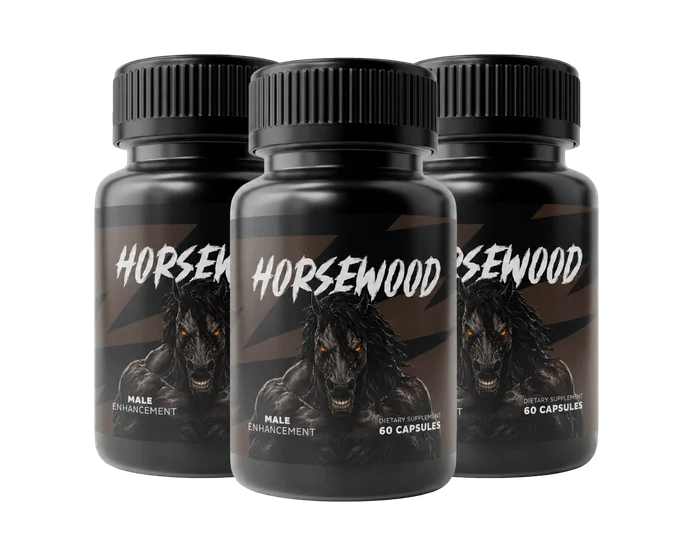
Horsewood is a botanical capsule taken daily, designed for gradual support rather than a same-day effect. The full ingredient panel and current bundle options are on the official store page.
See the Official StoreStress, cortisol and the seesaw
Cortisol and testosterone behave, in broad terms, like opposite ends of a seesaw. Sustained psychological stress keeps cortisol elevated, and elevated cortisol is associated with lower testosterone. This is the mechanism that adaptogenic botanicals are aimed at, and it is why the one ingredient in this category with the firmest human data — tongkat ali, which we cover in our evidence piece on cortisol and energy — produced its clearest result on cortisol rather than on testosterone.
But stress rarely arrives alone. It brings shorter sleep, more alcohol, less exercise, worse food and less time with a partner. Separating the direct hormonal effect from that cluster of behaviours is close to impossible in real life, and it is why anyone claiming a precise percentage for "stress reduction" is guessing. What is not in doubt is the direction of travel.
The evening routine that moves the needle
Sleep advice is often delivered as a list of twenty equally weighted rules, which is useless because they are not equal. Ranked by how much evidence sits behind each and how much effort it takes, the picture looks like this.
| Change | Evidence strength | Effort | Time to notice |
|---|---|---|---|
| Fixed wake time, seven days a week | Strong | Moderate | 1–2 weeks |
| Daylight within an hour of waking | Strong | Low | 1–2 weeks |
| No alcohol within 3 hours of bed | Strong | Moderate | Days |
| Caffeine cut-off by early afternoon | Good | Low | Days to a week |
| Cool, dark, quiet bedroom | Good | Low | Days |
| Regular resistance training | Good | High | Weeks to months |
| Evening screen filters | Weak | Low | Unclear |
The two at the top of that table are worth more than the rest combined, and both are unglamorous. A fixed wake time is what actually stabilises the body clock; a fixed bedtime largely follows from it. Morning daylight is the strongest signal your circadian system receives, and on a grey British morning an overcast sky outdoors still delivers far more light than a well-lit room indoors.
Alcohol: the variable most people leave out
Alcohol is the single most common reason a man sleeps eight hours and still wakes up flat. It shortens the time it takes to fall asleep, which is why it feels helpful, and then fragments the second half of the night and suppresses the deeper stages during which the largest hormonal pulses occur. Heavy chronic intake has its own separate and well-documented effects on male hormone production.
You do not have to stop drinking to test this. Moving the last drink three hours earlier, or taking three consecutive alcohol-free nights, produces a difference most men can feel in their morning energy. That is a cheaper experiment than any capsule, and it produces an answer faster.
A supplement taken on four hours of sleep is not being tested. It is being asked to compensate for the largest variable in the system, which nothing sold as a dietary supplement has ever been shown to do.
So where does a supplement genuinely fit?
On top, and only on top. Once sleep is consistent, alcohol is under control and there is some resistance training in the week, a botanical formula becomes a reasonable small addition — and, importantly, a testable one, because the noise around it has finally dropped enough for you to hear the signal. Put bluntly, the best male enhancement supplement for most men is the one they take after the foundation is built, not instead of building it.
Horsewood sits in exactly that slot: a daily botanical capsule aimed at gradual support for stamina, drive and steady energy, not a same-day effect and not a treatment for anything. Men searching for the best daily male enhancement pills are usually hoping for the reverse arrangement — the capsule first, the habits later — and that ordering is the reason so many of them are disappointed.
It is also why the question "are testosterone boosters legit" gets such inconsistent answers online. Two men take the same product; one has fixed his sleep and one has not; they report opposite experiences, and neither is lying.
What sleep and stress work cannot do
It cannot treat a medical condition, and it should not be used to postpone getting one looked at. Persistent erectile difficulty, a sudden change in drive, or fatigue that does not respond to a month of decent sleep are all reasons to see a doctor rather than to buy something. Sleep apnoea in particular is common in men, frequently undiagnosed, and worth ruling out if you snore heavily or wake unrefreshed — it is a clinical issue with clinical treatment, not a supplement problem.
It also cannot promise a specific number. The controlled studies tell you the direction and rough size of an effect in a laboratory population; they do not tell you what will happen to you. And the effect of sleep restriction reverses, which cuts both ways — the gains from a good fortnight disappear again if the fortnight does not continue. And it cannot substitute for medical care where a supplement cannot either — the honest ceiling on this whole category is set out in our piece on what male-health supplements cannot do for erectile health. If you do add a formula on top of the basics, the time of day you take it is a smaller decision than whether you take it at all.
Finally, none of this is a moral argument. Shift workers, new fathers and carers are not failing to try hard enough; they are in situations where the highest-yield lever is partly out of reach. In that case the honest advice is to protect what sleep you can, be realistic about what a capsule will add, and treat any supplement decision as a small optimisation rather than a solution.
An eight-week way to test all of this
Weeks one and two: fix the wake time and get outside within an hour of it. Change nothing else, so you can attribute what happens. Weeks three and four: move the last drink earlier and pull caffeine back to early afternoon. Weeks five to eight: add either resistance training or a supplement, but not both in the same fortnight, or you will not know which did what.
Keep a two-line note each morning — hours slept and energy out of ten. It sounds fussy and it takes twenty seconds, and it is the only thing that will stop you misremembering the whole experiment at the end. Men who track this almost always find that their worst days cluster around their shortest nights, which is a more useful discovery than any product page.
If the foundation is genuinely in place and you still want to add a formula, the sensible approach is the same one we apply to minerals such as zinc, magnesium and vitamin D: read the panel, compare the amounts against something published, and give it eight to twelve weeks before deciding.
Ready to add the formula on top?
Seven botanicals and boron in a daily capsule, with every ingredient graded by the strength of its human evidence. If you have been trying to work out where to buy testosterone booster style formulas without a reseller in the middle, the official store is the only link we carry.
Check AvailabilityFrequently asked questions
How much does poor sleep affect male hormone levels?
A controlled study published in JAMA in 2011 restricted healthy young men to five hours of sleep a night for one week and measured a daytime testosterone drop in the region of 10 to 15 per cent. That is a larger and faster change than any supplement in this category has demonstrated, and it reversed when normal sleep resumed.
How long does it take to feel better after fixing sleep?
Mood and daytime energy often improve within a week of consistent sleep. Hormone measures follow the sleep pattern fairly closely in short studies, so a fortnight of steady seven to nine hour nights is a reasonable first checkpoint. Anything driven by chronic stress rather than sleep timing usually takes longer.
Does stress lower libido on its own?
Yes, through more than one route. Sustained stress raises cortisol, disturbs sleep, reduces the mental bandwidth that desire depends on, and often brings more alcohol and less exercise with it. Separating the direct hormonal effect from the behavioural ones is difficult, which is why stress management is treated as a foundation rather than a single mechanism.
Can a supplement replace good sleep?
No. Nothing sold as a dietary supplement has been shown to offset the effects of chronic short sleep, and no supplement claims to treat a sleep disorder. A botanical formula is a small addition on top of the foundation, not a substitute for it. If you snore heavily, wake unrefreshed or fall asleep during the day, ask a doctor about sleep apnoea before buying anything.
References
- PubMed — Leproult & Van Cauter, effect of 1 week of sleep restriction on testosterone levels in young healthy men (JAMA, 2011)
- NHLBI (NIH) — Sleep deprivation and deficiency
- National Institute on Aging (NIH) — A good night's sleep
- Harvard Health Publishing — Sleep topic hub
- Mayo Clinic — Sleep tips for better rest
About Horsewood, the product this site covers
Horsewood is a two-a-day gelatin capsule sold for male vitality, carrying seven openly dosed ingredients — tongkat ali, horny goat weed, saw palmetto, wild yam, sarsaparilla, nettle leaf and boron amino acid chelate — at 60 capsules a bottle. Our Horsewood ingredients, price and official website guide reads the Supplement Facts panel line by line and compares each amount with the amount its supporting trial actually used. The rest of this research library is indexed on the Horsaewood evidence blog.
Affiliate disclosure (FTC 16 CFR Part 255). Horsaewood Media is an independent publisher, not the manufacturer or seller. Links marked “Get Offer” are affiliate links: if you buy through one we may earn a commission at no extra cost to you, and that commission has not changed what this article says about the evidence. FDA statement. These statements have not been evaluated by the Food and Drug Administration. Dietary supplements are not intended to diagnose, treat, cure or prevent any disease. This article is information, not medical advice — see our medical disclaimer.