What the Best Male Enhancement Pills for Erectile Dysfunction Cannot Do
Quick Answer: Can a Supplement Fix Erectile Difficulty?
No. An erection is a vascular event that depends on healthy arteries, intact nerves, adequate hormones and a nervous system that is not in alarm mode, and no dietary supplement addresses that chain of causes. A small number of ingredients have modest human data for adjacent outcomes such as desire, self-rated hardness or stress load, but persistent difficulty is a medical matter that belongs with a doctor. What supplements can reasonably do is support the general background conditions, which is a smaller and slower claim than the category usually makes.
- Best-supported ingredients: L-citrulline and panax ginseng, both on small and imperfect trials.
- Biggest risk: adulteration with undeclared prescription drug ingredients.
- Best first move: get blood pressure, blood sugar and cholesterol checked.
Type "best male enhancement pills for erectile dysfunction" into a search box and you will get a results page written almost entirely by people selling something. The language is confident, the mechanism is vague, and the one thing almost nobody states plainly is the thing that matters most: erectile difficulty is a symptom, and a symptom with several very different possible causes behind it.
This piece is a deliberate counterweight. It sets out what an erection physically requires, which supplement ingredients have any human evidence at all, where that evidence stops, and the specific safety problem that makes this one of the worst categories on the internet to shop blind. If that reads as an odd thing to publish on a site that carries a botanical product, so be it. A page that tells you what a capsule cannot do is more useful than one that pretends the question is simple.

What an erection actually depends on
Mechanically, an erection is a plumbing event with an electrical trigger. Sexual stimulation causes nerve endings and the lining of the blood vessels in the penis to release nitric oxide. Nitric oxide raises cyclic GMP inside the smooth muscle of the arteries, that muscle relaxes, the arteries widen, blood fills the two spongy chambers, and the expanding tissue compresses the veins that would otherwise drain it. Four systems have to cooperate: arteries, nerves, hormones and mood.
Break any link and the sequence fails. Narrowed or stiff arteries mean not enough inflow, which is why the same risk factors that matter for the heart, namely blood pressure, blood sugar, cholesterol, smoking and abdominal weight, matter here first. Nerve damage from diabetes or pelvic surgery interrupts the signal. Low testosterone dampens desire and the frequency of spontaneous erections, though it is a less common single cause than the category implies. And anxiety recruits the sympathetic nervous system, which does the exact opposite of what is required: it constricts.
Common medications sit on top of that. Several blood-pressure drugs, some antidepressants and a number of other prescriptions list erectile difficulty among their effects. Alcohol does it acutely, and heavy long-term drinking does it chronically. None of those causes is addressed by a botanical blend, and that is not a criticism of botanicals. It is a statement about what kind of problem this is.
Why the best male enhancement pills for erectile dysfunction cannot treat it
There is a regulatory reason and a biological one, and they point the same way.
The regulatory reason is straightforward. Dietary supplements are food, not medicine. They are not permitted to claim to diagnose, treat, cure or prevent any disease, and erectile dysfunction is a recognised medical condition. Any product page that claims otherwise is either breaking the rules or hedging with phrasing so soft it means nothing. When you see "supports healthy circulation" next to imagery that implies something far more specific, that gap is the regulation doing its job and the copywriter working around it.
The biological reason is more interesting. Prescription treatments for erectile dysfunction work by inhibiting the enzyme that breaks cyclic GMP down, which amplifies a signal that is already being produced. They do not create desire and they do not repair arteries. They lower the threshold for a response the body can still mount. Botanical ingredients that get compared to them are usually working, at best, several steps upstream: supplying a precursor to nitric oxide, nudging a stress hormone, supporting a nutrient status. Upstream effects are real but small, slow and easily swamped by everything else in a person's life.
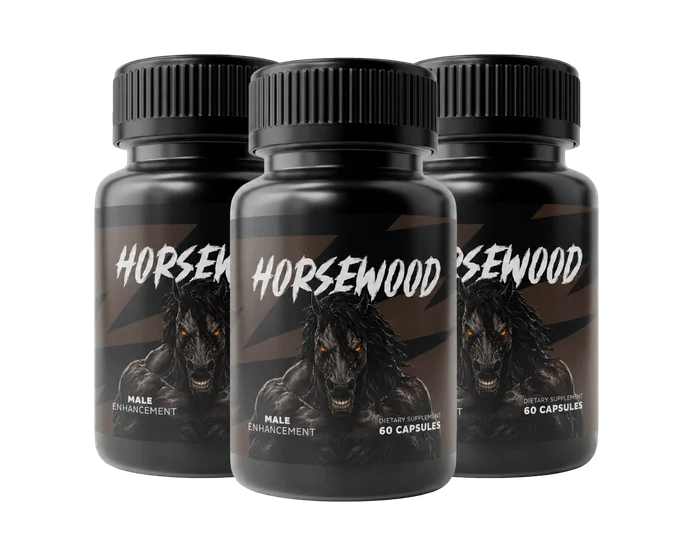
So the honest framing for anything in this category, including the formula this site covers, is background support rather than intervention. If you want to understand where a botanical blend genuinely sits, the ingredient panel and the evidence grade behind each item is the whole story, and that is what the main Horsewood breakdown works through line by line.
See what is actually in the formula
Seven botanical extracts plus boron, with the full per-ingredient panel and current bundle options published on the official store page rather than summarised second hand.
See the Official StoreThe ingredients that keep showing up, and what the data says
Strip the marketing away and the same handful of ingredients appear across almost every product in this space. Their evidence bases are not equal, and none of them is strong.
L-citrulline has the clearest mechanism. Arginine is the raw material the body converts into nitric oxide, but arginine taken by mouth is largely broken down before it reaches the bloodstream. Citrulline bypasses that first-pass problem and raises blood arginine more reliably. A small, short study in men with mild symptoms reported an improvement in a self-rated hardness score. It was a small group over a brief period, and it has not been followed by the large trial that would settle the question. The absorption argument behind it, and the study doses actually used, are set out in our piece on L-citrulline, arginine and the blood flow evidence.
Panax ginseng has the most human trials. A published pooled analysis of several small randomised studies found a direction of benefit for erectile function, and the authors were candid that the included trials were methodologically weak, with small samples and short follow-up. That is a real signal worth knowing about and it is not a conclusion.
Horny goat weed is sold on icariin, a compound that does inhibit the relevant enzyme in laboratory conditions. The gap between a test tube and a human being is enormous here: the concentrations that work in a dish are not the concentrations a capsule produces in the body, and controlled human trials are essentially absent.
Maca has some small-trial support for self-reported sexual desire, which is genuinely a different outcome from erectile function. It is worth having and it is worth labelling correctly.
Yohimbe deserves a separate warning. Prescription-strength yohimbine hydrochloride has older trial support, but it also raises blood pressure and heart rate and can cause anxiety and worse. The herbal bark extract sold in supplements contains wildly variable and sometimes undeclared amounts of the active compound. This is one ingredient where "natural" tells you nothing useful about the risk.
| Ingredient | Typical supplement dose | Outcome studied | Evidence strength |
|---|---|---|---|
| L-citrulline | 1.5–6 g daily | Self-rated erection hardness | Weak — one small short study |
| Panax ginseng | 600–1,000 mg, three times daily in trials | Erectile function scores | Modest — several small, low-quality trials |
| L-arginine | 1.5–5 g daily | Nitric oxide availability | Weak — poor oral bioavailability |
| Maca | 1.5–3 g daily | Self-reported desire, not function | Weak — small trials, different endpoint |
| Horny goat weed (icariin) | Rarely declared per ingredient | Enzyme inhibition in the laboratory | Insufficient — almost no human data |
| Tongkat ali | 200–400 mg standardised extract | Cortisol, mood, testosterone | Reasonable for stress, not for erections |
| Yohimbe bark | Highly variable, often undeclared | Adrenergic effects | Risk outweighs supplement-grade evidence |
Read that table as a ranking of uncertainty rather than a shopping list. Even the top rows describe studies that a cautious clinician would call preliminary, and the doses in the left-hand column are the ones used in research, which is frequently not what a blended capsule delivers.
The adulteration problem nobody advertises
This is the part of the category that genuinely deserves alarm, and it has nothing to do with whether the herbs work.
Regulators have issued a long run of public notifications about sexual enhancement products, sold online and in convenience stores, that were found on testing to contain undeclared prescription drug ingredients: sildenafil, tadalafil or chemical analogues of them that do not appear anywhere on the label. The commercial logic is obvious. A product that produces a same-night effect sells far better than one that honestly promises nothing noticeable for eight weeks.
The danger is specific rather than theoretical. Those drug ingredients interact severely with nitrates, which are prescribed for angina and other heart conditions, and the combination can cause a dangerous drop in blood pressure. A man taking a nitrate would know to avoid the prescription drug. He has no way of knowing it is in a capsule marketed as a herbal blend, because the label does not say so.
A supplement that produces a dramatic same-evening effect is telling you something about its contents, not about the power of botany. Slow and modest is what an honest formula in this category feels like.
Two practical filters cut most of this risk. Avoid single-serve sachets and blister packs sold at petrol stations and corner shops, which are where the majority of flagged products have turned up. And prefer manufacturers that publish a full per-ingredient panel with amounts, manufacture in inspected facilities and pay for independent batch testing. That is not a guarantee. It is the difference between a checkable supply chain and an anonymous one.

What a persistent change can signal
Here is the point that turns this from a shopping question into a health one. The arteries supplying the penis are considerably narrower than the coronary arteries. When the lining of blood vessels starts to function poorly throughout the body, the smallest vessels tend to show it first, which is why clinicians treat a new and persistent erectile change in a middle-aged man as a reason to look at cardiovascular risk factors rather than as an isolated inconvenience.
That is not a reason to panic and it is emphatically not a diagnosis anyone should make from a web page. It is a reason to book an appointment. A doctor can check blood pressure, blood sugar, lipids and, if it is warranted, testosterone, and can check whether a medication you are already taking is the simplest explanation. Any of those findings changes what you should do next far more than the choice between one botanical blend and another.
The timing pattern is worth noting too. Difficulty that appears suddenly in a stressful month, and comes and goes depending on circumstance, points more towards the psychological and nervous-system side. Difficulty that has crept in gradually over a year or more, including a decline in spontaneous morning erections, points more towards the vascular and hormonal side. Both are worth raising; the second is more urgent.
What this category cannot do
Stated plainly, so there is no ambiguity. No supplement on this page or any other treats erectile dysfunction, and nothing sold as a food supplement is permitted to claim it does. Nothing here reverses arterial narrowing, repairs nerve damage from diabetes or pelvic surgery, or corrects clinically low testosterone, which is a medical diagnosis requiring blood tests and medical supervision.
Nor can a capsule change anatomy. The corner of the market that markets on size is selling something no oral product has ever been shown to deliver, and the searches around growth and enlargement are where the tainted products cluster most heavily.
Supplements also cannot resolve a relationship problem, performance anxiety or depression, all of which are common and treatable contributors. And they cannot outrun the basics. No botanical compensates for smoking, for five hours of sleep, or for drinking most evenings. If those are in play, they are the intervention, and everything else is decoration. We set out that argument in more detail in our piece on sleep, stress and the foundations of libido.
The last limitation is about time. Every mechanism discussed here is gradual. Anything promising an effect within an hour is either describing a placebo response or containing something it has not declared.
What actually moves the needle
The interventions with the best evidence in this whole area are unglamorous and free. Regular aerobic exercise has repeatedly been associated with improved erectile function, most likely because it improves the function of the blood vessel lining, which is exactly the tissue involved. Losing excess abdominal weight helps for the same reason and improves hormone profile as a bonus. Stopping smoking helps, and it helps relatively quickly.
Sleep matters more than most people expect. Testosterone release is tied to sleep architecture, and untreated obstructive sleep apnoea is a genuinely common and genuinely reversible contributor that a supplement cannot touch. Alcohol reduction helps at both the acute and chronic level. A Mediterranean-style eating pattern has some supporting data, probably through the same vascular route. The exercise finding is the best-evidenced of the lot: a meta-analysis of randomised trials found a clear improvement in erectile function scores with aerobic training (Journal of Sexual Medicine, 2023). If you want the nutrient side of the same picture, our piece on zinc, magnesium and vitamin D for male vitality covers where a deficiency genuinely matters, and our realistic view of natural ED support supplements covers what the marketed products do and do not achieve.
Where does a botanical formula sit against that list? Honestly: underneath it. It is a reasonable addition once the foundations are in place, and a poor substitute for them. Anyone asking whether testosterone boosters are worth it is really asking whether the marginal effect justifies the cost, and the answer depends almost entirely on whether the basics have already been dealt with. If they have not, the money is better spent elsewhere.
How to shop sensibly if you still want a supplement
Suppose you have had the medical conversation, the foundations are broadly in order, and you still want to try something. Three rules make the purchase defensible.
First, insist on a per-ingredient panel. A label that declares a single "proprietary blend, 1,400 mg" makes it impossible to know whether the ginseng portion is 600 mg or 60 mg, and comparison against a research dose is the only objective check available to a buyer. Second, buy from the manufacturer rather than a marketplace reseller. Most of the counterfeiting and repackaging in this category happens downstream, and the people searching where to buy testosterone booster products at the lowest price are precisely the ones most likely to land on a relabelled batch. Third, treat it as an experiment with a defined endpoint: eight to twelve weeks, one change at a time, and an honest verdict at the end.
Set expectations accordingly. Comparing the best male enhancement pills over the counter shelves carry will not produce anything that behaves like a medicine, because by law and by biology it cannot. What it can produce is a formula whose contents you can verify and whose claims stay inside what the evidence supports. That is a lower ceiling than the advertising suggests and a much more reliable floor.
Check the panel before you buy anything
Horsewood publishes every ingredient with its amount, so you can hold it against the doses in the table above instead of taking a claim on trust. The official store is the only link we carry, and it is where current bundle options and the price table are listed.
Check AvailabilityFrequently asked questions
Can the best male enhancement pills for erectile dysfunction actually fix the problem?
No. Erectile dysfunction is a medical condition with vascular, neurological, hormonal and psychological causes, and a dietary supplement is not a treatment for it. A few botanical ingredients have small studies behind them for related outcomes such as desire or self-rated erection hardness, but that is a long way from resolving an underlying cause. If erections have changed noticeably over weeks or months, the useful first step is a doctor's appointment rather than a checkout page.
Which supplement ingredients have the most human data for erectile health?
L-citrulline and panax ginseng have the most, and both bodies of work are modest. L-citrulline raises blood arginine more reliably than arginine taken by mouth, and a small short study in men with mild symptoms reported an improvement in self-rated hardness. Panax ginseng has several small randomised trials and a pooled analysis pointing in a positive direction, with the authors themselves noting that the trial quality was low. Neither is a substitute for medical assessment.
Are over the counter male enhancement pills safe?
The declared ingredients are usually well tolerated, but the category has a documented adulteration problem. Regulators have repeatedly issued public notifications about sexual enhancement products found to contain undeclared prescription drug ingredients, which can be dangerous for anyone taking nitrates for a heart condition. Buying from a manufacturer that publishes a full per-ingredient panel and independent testing reduces that risk without removing it entirely.
Should I see a doctor about erectile difficulty?
Yes, particularly if it has developed gradually over months rather than appearing in one stressful week. Erectile function depends on very small blood vessels and nerves, so clinicians treat a persistent change as a prompt to check blood pressure, blood sugar, cholesterol and hormone levels. It is a short conversation, and it rules things in or out that no supplement label can address.
References
- NIH National Institute of Diabetes and Digestive and Kidney Diseases — Erectile dysfunction: causes, diagnosis and management
- Mayo Clinic — Erectile dysfunction: symptoms, causes and risk factors
- PubMed — Cormio et al., oral L-citrulline supplementation improves erection hardness in men with mild erectile dysfunction (Urology, 2011)
- PubMed — Jang et al., red ginseng for treating erectile dysfunction: a systematic review (Br J Clin Pharmacol, 2008)
- Harvard Health Publishing — Men's health: exercise, weight and vascular function
About Horsewood, the product this site covers
Horsewood is a two-a-day gelatin capsule sold for male vitality, carrying seven openly dosed ingredients — tongkat ali, horny goat weed, saw palmetto, wild yam, sarsaparilla, nettle leaf and boron amino acid chelate — at 60 capsules a bottle. Our Horsewood ingredients, price and official website guide reads the Supplement Facts panel line by line and compares each amount with the amount its supporting trial actually used. The rest of this research library is indexed on the Horsaewood evidence blog.
Affiliate disclosure (FTC 16 CFR Part 255). Horsaewood Media is an independent publisher, not the manufacturer or seller. Links marked “Get Offer” are affiliate links: if you buy through one we may earn a commission at no extra cost to you, and that commission has not changed what this article says about the evidence. FDA statement. These statements have not been evaluated by the Food and Drug Administration. Dietary supplements are not intended to diagnose, treat, cure or prevent any disease. This article is information, not medical advice — see our medical disclaimer.