Horsewood Ingredients Label Walkthrough
Quick Answer: How Do You Read the Horsewood Ingredients Label?
To read the Horsewood ingredients label, check that each of its seven botanicals plus boron shows a named amount rather than hiding in a proprietary blend, look for standardisation percentages, scan for fillers, and confirm third-party testing. Then match each ingredient to what its studies actually measured before you judge the formula.
- Named amounts, not blends: every active should show its own milligrams.
- Standardisation percentage: tells you how concentrated an extract really is.
- Third-party seal: independent testing confirms what the label claims.
The Horsewood ingredients label is the single most useful document you can read before deciding whether this formula is worth your money, and most buyers skip straight past it to the price. That is backwards. In a category where the marketing is loud and the regulation forbids the boldest claims, the label is the one place a product has to be specific, and learning to read it turns you from a target into an informed buyer. This walkthrough teaches that skill using Horsewood as the worked example, so that transparency itself becomes the thing you shop on.
The approach here is deliberately even-handed. We will point out what a good label shows, where the evidence behind each ingredient is strong and where it is thin, and how to tell an honest panel from a padded one. By the end you should be able to pick up any male vitality bottle, not only this one, and know within thirty seconds whether it respects you enough to tell you what is actually inside. That is a skill worth more than any single review.
What is on the Horsewood ingredients label
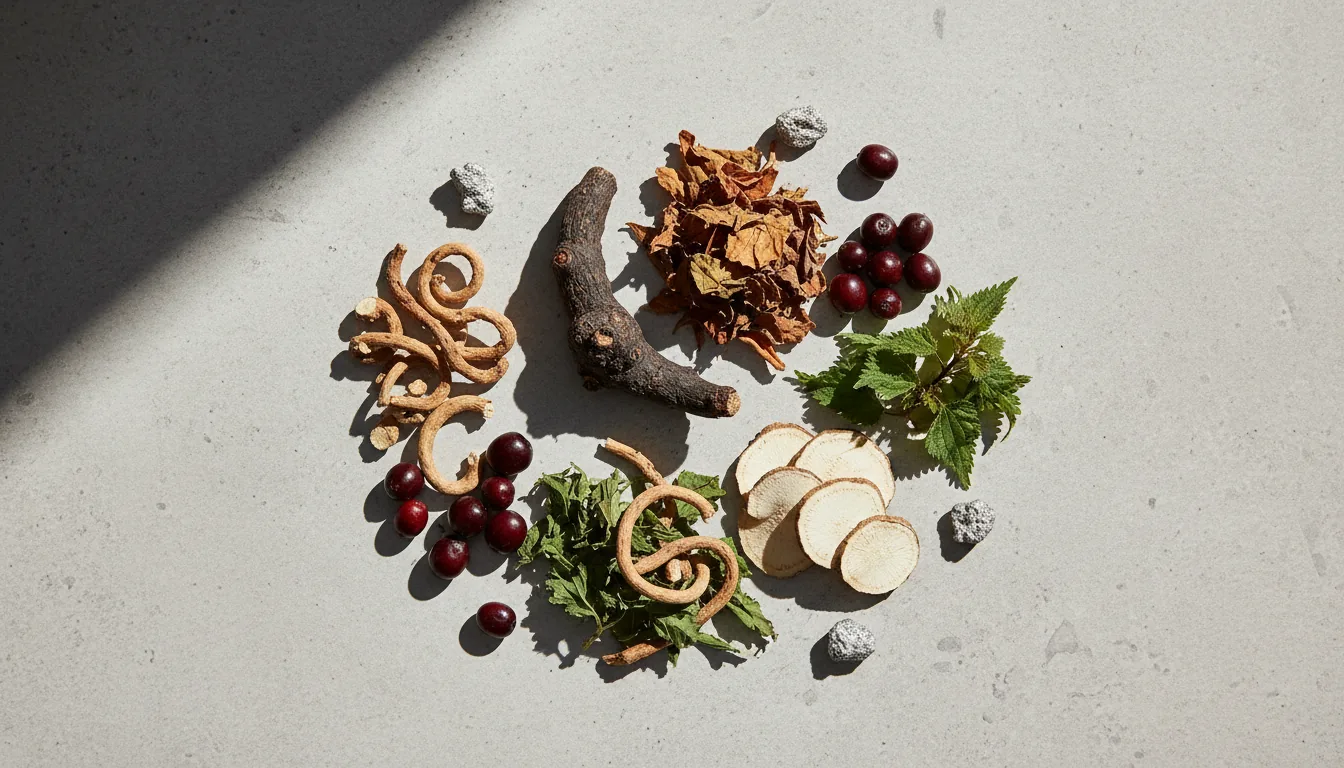
Horsewood is a botanical formula, not a stimulant blend, and its panel lists seven plant and mineral ingredients: tongkat ali, horny goat weed standardised for icariin, saw palmetto, wild yam, sarsaparilla, nettle leaf and boron. Each bottle is a thirty-day supply, which is why the larger sixty, ninety and one-hundred-eighty-day packs exist; the ingredients act cumulatively over weeks, so a single bottle is rarely a fair test on its own.
Notice what that ingredient list is doing. It is a set of traditionally combined botanicals positioned for male vitality, stamina and daily energy, rather than a caffeine hit engineered to make you feel something within the hour. That distinction matters when you read any label in this space: a formula that produces a dramatic same-day sensation is usually telling you about a stimulant it contains, not about the botanical support it advertises. Horsewood sits firmly on the slow-and-cumulative side, and the label reflects that with ingredients chosen for how they work together over time.
Named doses versus a hidden proprietary blend
This is the first and most important thing to check on any Supplement Facts panel, and it separates transparent products from evasive ones. A proprietary blend is a labelling technique that lists several ingredients together under a single total weight, say "Vitality Blend, 1,400 mg," without telling you how that weight is divided. It looks specific. It is not. That total could be ninety per cent of a cheap filler botanical and a sprinkle of the expensive, evidence-backed one, and the label would look identical either way.
The reason this matters is comparison. The only objective check a buyer has is to hold each ingredient against the amount used in the studies that make it worth including. If the panel hides the individual amounts inside a blend, that comparison becomes impossible, and you are left trusting the manufacturer's implication rather than checking their arithmetic. Horsewood takes the labelled route, listing its ingredients on an open panel rather than burying them in a single proprietary weight, which is precisely what makes the rest of this walkthrough possible. When you evaluate a competitor, a hidden blend should drop it several places immediately.
See the full panel for yourself
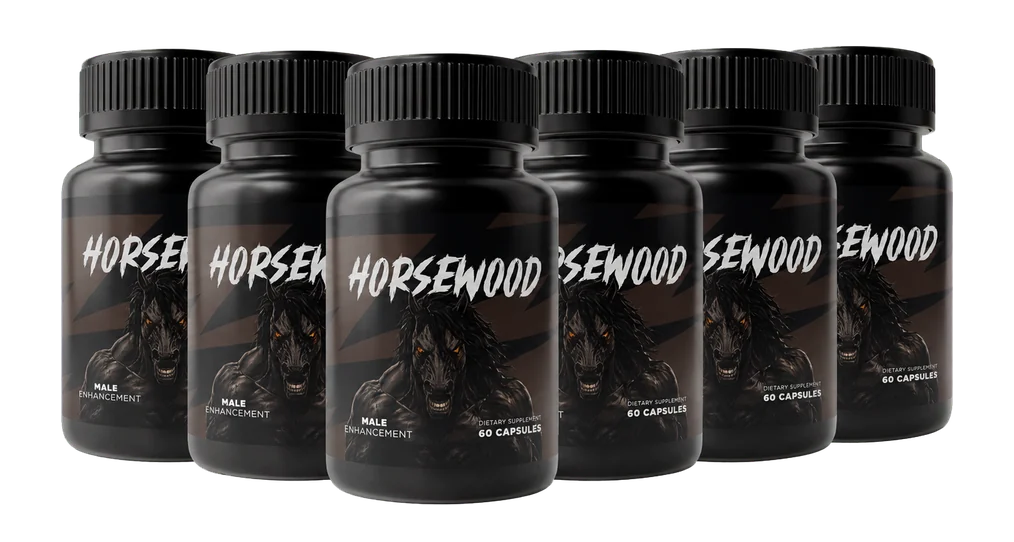
The official store page publishes the complete Horsewood ingredient panel with amounts, so you can apply everything in this walkthrough to the real thing rather than a summary. Current bundles and pricing are there too.
See the Official StoreStandardisation percentages: how strong an extract really is
Once you can see each ingredient's amount, the next detail that separates a serious formula from a decorative one is standardisation. A raw milligram figure only tells you how much plant material is in the capsule, not how much of the active compound it delivers. Standardisation fixes that by guaranteeing a percentage of the marker compound. Horny goat weed standardised to a stated percentage of icariin, for example, tells you far more than "horny goat weed 300 mg" alone, because the icariin content is the part the research is about.
The same logic applies across the panel. A standardised extract has been processed and tested to hit a consistent concentration, batch after batch, which is why standardisation is one of the clearest signals that a manufacturer is thinking about outcomes rather than shelf appeal. When you see a percentage on a label, it is doing real work. When an extract is listed with no standardisation at all, you genuinely do not know how potent it is, and neither, in many cases, does the seller. Reading those percentages is a skill that transfers to every botanical you will ever buy, and it is the same discipline we apply when we look at what men should look for in gut and vitality formulas.
Spotting fillers in the "other ingredients" line
Below the active panel sits a line usually headed "other ingredients," and it is where the unglamorous truth lives. Every capsule needs some non-active components: something to fill the capsule, something to stop the powder clumping, and the capsule shell itself. A short, recognisable list here, rice flour, vegetable cellulose, a small amount of a flow agent, is completely normal and no cause for concern.
What you are scanning for is proportion and padding. If the other-ingredients line is long and dominates the formula, or if cheap bulking agents appear to be doing most of the work while the active doses look token, that is a formula spending your money on filler. The tell is often a mismatch: bold front-of-bottle claims paired with actives that, once you can see their individual amounts, fall well short of any studied dose. A clean, minimal other-ingredients line alongside meaningful active amounts is the pattern you want, and it is one more reason the labelled-panel approach matters, because a proprietary blend hides exactly this.
Confirming third-party testing and manufacturing standards
A label makes claims; testing verifies them. The male-enhancement category has a well-documented history of products found, on independent testing, to contain undeclared or misrepresented ingredients, so the presence of genuine quality controls is not a nicety here, it is a safety filter. Two things are worth confirming. First, that the product is manufactured in an inspected facility that follows good manufacturing practices, which governs cleanliness, consistency and accurate dosing. Second, that batches are subject to third-party testing, ideally with a Certificate of Analysis available on request.
Independent verification is the only step that catches a gap between what the label prints and what the capsule contains, whether that gap is an honest manufacturing error or something worse. A product sold with a traceable supply chain and published testing has passed a checkable bar; one sold anonymously through a marketplace has not. This is also why buying direct matters, because most of the relabelling and counterfeiting in this category happens downstream of the manufacturer. If you want the broader trust assessment, our full Horsewood buyer's guide weighs the sourcing and guarantee alongside the label.
Tying each ingredient to what the trials actually measured
Here is where honesty has to lead, because a label can list an impressive-sounding botanical whose human evidence is thin. Walking the Horsewood panel with a clear eye: tongkat ali has the firmest footing, with trials in stressed adults reporting reductions in cortisol and improvements in self-reported energy and mood. That is a real, if modest, effect, and it is the part of the formula on the strongest ground. Boron has some research on hormone metabolism, which is why it earns its place alongside the botanicals.
The others are more traditional than trial-backed, and a fair walkthrough says so. Saw palmetto is studied mostly in the context of prostate and urinary symptoms rather than vitality, and even there the evidence is mixed; if that is your interest, it is worth reading what the evidence shows on prostate supplements before drawing conclusions. Horny goat weed rests largely on laboratory work on icariin rather than robust human trials. Wild yam, sarsaparilla and nettle leaf lean heavily on traditional use. None of this makes the formula dishonest; it makes it a botanical supplement, and the responsible way to read the label is to match each ingredient to what its studies actually measured rather than to the outcome the category implies.
Objection: "There's no trial on the finished product, isn't that a red flag?"
It is a fair question, and the honest answer is that it is normal rather than damning, provided you understand what it means. Almost no botanical supplement in this category has a published clinical trial on the exact finished blend, because such trials are expensive and the commercial incentive to run them is weak. What that absence means is that you cannot claim the specific combination has been proven; the evidence lives at the individual-ingredient level, which is precisely why reading the panel ingredient by ingredient is the right method.
Where it would be a genuine red flag is if a product used the lack of finished-product trials as cover to make dramatic claims anyway. Horsewood does the opposite: it is described plainly as a supplement, not a medicine, and it makes no claim to treat any condition. That honesty is itself a data point. A label that stays inside what the evidence supports, and a company that tells you where the evidence is thin, is more trustworthy than one that papers over the same gap with confident promises. Compare that posture against rivals using the checklist in our guide to how to compare the best men's libido supplements.
Reading the label as a buying decision
Pull the threads together and the Horsewood ingredients label becomes a decision tool rather than decoration. The sequence is always the same. Confirm the actives are listed individually, not hidden in a proprietary blend. Read the standardisation percentages to judge real potency, not just plant weight. Scan the other-ingredients line for padding. Check for inspected-facility manufacturing and third-party testing. Then, and only then, match each ingredient to the outcome its studies measured, and set your expectations to the level the strongest evidence, tongkat ali and boron, will actually carry.
Do that and you will notice the formula is asking to be judged on transparency, which is a rare and defensible position in this market. It will not behave like a medication, no supplement does, and it is not sold as one. What it offers is a labelled, checkable botanical formula whose claims stay inside the evidence, which is a lower ceiling than the advertising elsewhere and a far more reliable floor. If you want the wider context around the product and its guarantee, the main Horsewood review covers the sourcing, bundles and refund terms in one place. The label is where trust is either earned or lost, and now you can read it for yourself.
Read the panel before you buy
Everything in this walkthrough applies to the real Horsewood panel published on the official store, where each ingredient is listed with its amount alongside current bundle options and the price table. It is the only link we carry.
Check AvailabilityRelated reading
Frequently asked questions
What ingredients are in Horsewood?
Horsewood is built from seven botanical and mineral ingredients: tongkat ali, horny goat weed (icariin), saw palmetto, wild yam, sarsaparilla, nettle leaf and boron. It is a botanical formula positioned for male vitality, stamina and daily energy rather than a stimulant blend. There is no published trial on the finished product, so the evidence lives at the individual-ingredient level.
Does Horsewood use a proprietary blend?
No. Horsewood lists its ingredients on a labelled panel rather than hiding them inside a single proprietary blend weight. That matters because a proprietary blend tells you the total milligrams of a mix but not how much of each ingredient it contains, which makes it impossible to compare any single component against the dose used in research. A labelled panel is what lets you check the formula honestly.
How do I read a supplement label?
Read a supplement label from the Supplement Facts panel outward. Check that each active ingredient shows its own amount rather than sitting inside a proprietary blend, look for a standardisation percentage that tells you how concentrated an extract is, scan the other ingredients line for fillers, and confirm the product is made in an inspected facility with third-party batch testing. Then compare each dose to what studies used.
Are the doses backed by studies?
Partly, and honesty matters here. Tongkat ali has the firmest human data, mainly for cortisol and self-reported energy, and boron has some research on hormone metabolism. Other ingredients like saw palmetto, nettle, wild yam and sarsaparilla rest on thinner or largely traditional evidence. No supplement in this category treats a medical condition, and there is no trial on Horsewood as a finished product.
References
- U.S. Food and Drug Administration — Dietary supplement labeling guide and Supplement Facts requirements
- NIH Office of Dietary Supplements — Boron fact sheet and hormone metabolism research
- PubMed — Talbott et al., effect of Tongkat Ali on stress hormones and psychological mood state in moderately stressed subjects (J Int Soc Sports Nutr, 2013)
- NIH National Center for Complementary and Integrative Health — Saw palmetto evidence review
- U.S. Pharmacopeia — Third-party verification and quality standards for supplements
About Horsewood, the product this site covers
Horsewood is a two-a-day gelatin capsule sold for male vitality, carrying seven openly dosed ingredients — tongkat ali, horny goat weed, saw palmetto, wild yam, sarsaparilla, nettle leaf and boron amino acid chelate — at 60 capsules a bottle. Our Horsewood ingredients, price and official website guide reads the Supplement Facts panel line by line and compares each amount with the amount its supporting trial actually used. The rest of this research library is indexed on the Horsaewood evidence blog.
Affiliate disclosure (FTC 16 CFR Part 255). Horsaewood Media is an independent publisher, not the manufacturer or seller. Links marked “Get Offer” are affiliate links: if you buy through one we may earn a commission at no extra cost to you, and that commission has not changed what this article says about the evidence. FDA statement. These statements have not been evaluated by the Food and Drug Administration. Dietary supplements are not intended to diagnose, treat, cure or prevent any disease. This article is information, not medical advice — see our medical disclaimer.