Prostate Supplements: What Evidence Shows
Do Prostate Supplements Actually Work?
The prostate supplements evidence is genuinely mixed. Saw palmetto, beta-sitosterol, pygeum and zinc are the usual candidates, and results across trials are inconsistent rather than conclusive. Some men report easier urinary symptoms, many notice nothing, and no prostate supplement is a treatment for BPH or prostate disease. Persistent symptoms need a doctor.
- Usual candidates: saw palmetto (~320 mg), beta-sitosterol, pygeum, zinc.
- Evidence: inconsistent and mixed, not conclusive.
- Not a treatment: supplements do not treat BPH or prostate disease.
By the time a man reaches his fifties, the prostate has usually become a topic he did not ask to think about: an extra trip to the bathroom at night, a stream that takes its time, a vague awareness that this is what happens with age. Into that discomfort steps a crowded shelf of pills, and the honest starting point is that the prostate supplements evidence is far less settled than the confident packaging suggests. Some ingredients have real research behind them; most of that research is mixed.
This is a balanced review for the aging-male reader who wants the truth rather than a sales pitch. We will go through the ingredients that keep appearing, what the strongest trials actually found, the crucial difference between easing a symptom and treating a disease, and the specific signs that mean you should close the browser tab and call a doctor instead.

What prostate supplements evidence actually shows
Zoom out before looking at individual ingredients, because the shape of the overall evidence matters more than any single study. The most rigorous work in this area has focused on saw palmetto, and the pattern is instructive: early, smaller and often industry-linked trials were encouraging, while later, larger, independently funded and better-blinded trials tended to find no meaningful advantage over placebo for urinary symptoms. When the quality of a trial goes up and the effect goes down, that tells you the real effect is small or absent, not that the good trials missed something.
Beta-sitosterol and pygeum sit in a slightly friendlier position, mostly because their supportive studies have not been contradicted by large modern trials in the same decisive way, largely because those large trials were never done. That is a weaker kind of encouragement: evidence that has not been overturned is not the same as evidence that has been confirmed. The overall picture is a category with plausible ingredients, a scattering of positive results, and a shortage of the big, clean trials that would let anyone speak with confidence.
The usual candidates, ingredient by ingredient
Saw palmetto is the headline act, typically dosed around 320 mg of a fat-soluble extract per day. The proposed mechanism involves hormone metabolism in the prostate, and the ingredient is generally well tolerated. The problem is not safety; it is efficacy. In the largest, best-controlled trials it did not beat placebo for urinary symptom scores. Some men still report benefit, and a well-run placebo group reports benefit too, which is the whole reason blinded trials exist. We go deeper into this specific ingredient in our full write-up on the evidence behind saw palmetto for prostate symptoms.
Beta-sitosterol is a plant sterol found across many foods, concentrated for supplements. Several older randomised studies reported improvements in urinary flow and symptom scores, and while the trials were modest in size, the signal was more consistent than saw palmetto's later record. It is one of the more defensible ingredients in the category, with the honest caveat that the evidence base is aging and thin.
Pygeum, an extract of African cherry bark, has a similar story to beta-sitosterol: a cluster of small older trials suggesting modest symptom relief, and no large modern trial to settle the matter. Sustainability concerns around wild harvesting are a separate but real issue with this ingredient.
Zinc is essential for normal prostate and reproductive function, and the prostate concentrates zinc heavily. That biological fact gets stretched into a claim it cannot support: correcting a deficiency is worthwhile, but loading extra zinc on top of an adequate intake has not been shown to relieve prostate symptoms, and chronically high zinc can interfere with copper. It belongs in a formula for foundational reasons, not as a symptom fix. Our overview of how zinc, magnesium and vitamin D affect male vitality covers where the deficiency argument holds and where it does not.
A second tier of ingredients rounds out most labels: lycopene from tomatoes, pumpkin seed oil, and stinging nettle root. Each has a thread of supporting research, and each thread is thinner than the ones above. Lycopene is studied more for general prostate health markers than for urinary symptom relief. Pumpkin seed oil has a couple of small trials suggesting a modest effect on overactive-bladder-type symptoms. Stinging nettle is often combined with saw palmetto in European studies, which makes it hard to credit the nettle specifically. None of these earns a headline claim, and any of them can pad an ingredient list to look more impressive than the dosing justifies. The pattern across the whole second tier is the same as the first: plausible, occasionally encouraging, never decisive.
See a transparent prostate-support panel
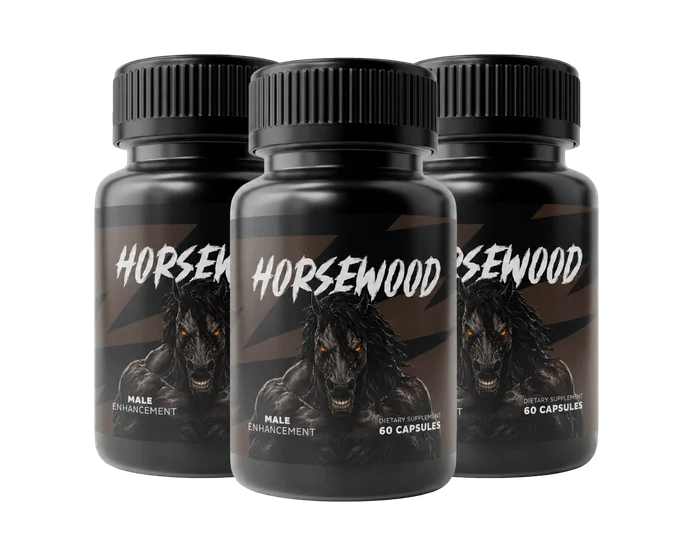
If you are going to try a formula, the amounts matter more than the front-of-box promises. Horsewood publishes every ingredient with its dose, so you can compare each one to the research figures in this article. Current bundles are on the official store.
See the Official StoreThe evidence at a glance
| Ingredient | Typical dose | Outcome studied | Evidence strength |
|---|---|---|---|
| Saw palmetto | ~320 mg extract daily | Urinary symptom scores | Weak — strongest trials show no benefit over placebo |
| Beta-sitosterol | 60–130 mg daily | Urinary flow and symptoms | Modest — older small trials, positive but dated |
| Pygeum | 100–200 mg daily | Nighttime urination, flow | Modest — small older trials, no large confirmation |
| Zinc | ~11 mg (RDA); more if deficient | Normal prostate function | Foundational only — no symptom benefit if replete |
Read the right-hand column as a spectrum of uncertainty. Even the more favourable rows rest on studies a cautious clinician would call preliminary, and none of them describes a treatment for an enlarged prostate.
Easing a symptom and treating a disease are different claims. A supplement may sit inside the first and is never permitted to make the second. Any prostate product that talks about shrinking or curing has crossed a line the evidence does not support.

What supplements cannot do for the prostate
Stated plainly so there is no ambiguity: no dietary supplement treats benign prostatic hyperplasia, prostatitis or prostate cancer, and nothing sold as a food supplement is permitted to claim it does. In particular, no supplement has been reliably shown to shrink an enlarged prostate. The prescription medicines that genuinely reduce prostate size work by blocking a specific hormonal conversion over months, a mechanism a botanical blend does not replicate at the doses in a capsule.
The distinction that gets blurred in marketing is between the gland and the symptoms. A few ingredients are studied for easing urinary symptoms, and that is a legitimate, modest, comfort-oriented claim. Changing the size or the disease state of the prostate is an entirely different order of claim, and it belongs to medicine. When a product page slides from the first into language that implies the second, the evidence is not travelling with it.
Three myths worth retiring
"It's natural, so it can only help." Natural describes an origin, not a safety or efficacy profile. Zinc taken chronically at high doses can disturb copper balance, saw palmetto can mildly affect some men's digestion, and any supplement can interact with medication. Natural is a marketing word here, not a medical one.
"More ingredients means a stronger formula." A long label often means each ingredient appears at a fraction of its studied dose, sharing space so the box can list impressive names. A short formula that doses two evidence-backed ingredients properly is more defensible than a ten-item blend that under-doses all of them. This is one reason the disclosed amount matters more than the count.
"If my symptoms improve, the supplement is working." Prostate symptoms fluctuate naturally, and placebo response in this area is well documented, which is precisely why the strongest trials use blinded placebo groups. Improvement after starting a supplement is encouraging for you personally and is not proof of cause. That is not a reason to dismiss your experience; it is a reason not to over-interpret it.
When to skip the supplement and see a doctor
Some symptoms are prompts for assessment, not experimentation. See a doctor if you notice a weak or interrupted urine stream, needing to strain, incomplete emptying, waking repeatedly at night to urinate, sudden urgency, blood in the urine or semen, pain on urination, or an inability to pass urine at all, which is an emergency. These signs can have several causes, and only some of them are the harmless enlargement people assume. A prostate supplement should never be the reason a real symptom goes unassessed for months.
The reassuring flip side is that a short appointment usually clears the picture. A doctor can check your symptom score, examine the prostate, run a urine test and, where appropriate, discuss a PSA blood test and its trade-offs. Whatever the outcome, you will make a far better decision about supplements afterwards, because you will know what you are and are not dealing with. If you do decide a formula is worth trialling, our full walkthrough of the Horsewood ingredients label shows how to read the amounts rather than the adjectives.
Compare the doses, not the promises
The only fair test of a prostate formula is each ingredient's amount held against the research figures above. Horsewood lists every dose openly, and the official store is the single link we carry for current bundles and pricing.
Check AvailabilityFrequently asked questions
Do prostate supplements actually work?
It depends on the ingredient and the person. In pooled analyses, saw palmetto has performed no better than placebo for urinary symptoms in the largest and best-controlled trials, while some smaller studies of beta-sitosterol and pygeum have reported symptom improvement. The honest summary is that the evidence is inconsistent: some men notice a difference, many do not, and no prostate supplement is a proven treatment.
Which prostate ingredients have evidence?
Beta-sitosterol and pygeum have the more encouraging symptom data among the common options, though the trials are older and smaller. Saw palmetto is the most studied and, in the strongest trials, the most disappointing. Zinc supports normal prostate and reproductive function if you are deficient, but topping up beyond your needs has not been shown to help symptoms. Evidence for all of them is limited rather than settled.
Can supplements shrink the prostate?
No supplement has been reliably shown to shrink an enlarged prostate. Benign prostatic enlargement is driven partly by hormones and age, and the medications that reduce prostate size work through mechanisms a dietary supplement does not replicate. Some ingredients are studied for easing urinary symptoms, which is a different claim from changing the size of the gland, and even that symptom evidence is inconsistent.
When should I see a doctor instead?
See a doctor if you have new or worsening urinary symptoms, a weak stream, waking repeatedly at night to urinate, blood in the urine or semen, pain, or difficulty passing urine. These warrant assessment rather than self-treatment, because they can have several causes, some of which need timely medical care. A supplement should never delay that conversation.
Related reading
References
- NIH National Center for Complementary and Integrative Health — Saw palmetto: what the science says
- PubMed — Tacklind et al., Serenoa repens for benign prostatic hyperplasia (Cochrane Database of Systematic Reviews, 2012)
- PubMed — Wilt et al., beta-sitosterols for benign prostatic hyperplasia (Cochrane Database of Systematic Reviews, 2000)
- NIH NIDDK — Prostate enlargement (benign prostatic hyperplasia)
- NIH Office of Dietary Supplements — Zinc: fact sheet for health professionals
About Horsewood, the product this site covers
Horsewood is a two-a-day gelatin capsule sold for male vitality, carrying seven openly dosed ingredients — tongkat ali, horny goat weed, saw palmetto, wild yam, sarsaparilla, nettle leaf and boron amino acid chelate — at 60 capsules a bottle. Our Horsewood ingredients, price and official website guide reads the Supplement Facts panel line by line and compares each amount with the amount its supporting trial actually used. The rest of this research library is indexed on the Horsaewood evidence blog.
Affiliate disclosure (FTC 16 CFR Part 255). Horsaewood Media is an independent publisher, not the manufacturer or seller. Links marked “Get Offer” are affiliate links: if you buy through one we may earn a commission at no extra cost to you, and that commission has not changed what this article says about the evidence. FDA statement. These statements have not been evaluated by the Food and Drug Administration. Dietary supplements are not intended to diagnose, treat, cure or prevent any disease. This article is information, not medical advice — see our medical disclaimer.