L-Citrulline and Arginine for Blood Flow
How Do L-Citrulline and Arginine Support Blood Flow?
L-citrulline and arginine feed the nitric oxide pathway that widens blood vessels, and citrulline raises blood arginine more reliably than arginine taken by mouth. Study doses run about 2.4 to 6 g of citrulline or 1.5 to 5 g of arginine daily. They support circulation, but they are not a substitute for ED medication.
- Better absorbed: L-citrulline outperforms oral arginine for raising blood arginine.
- Study doses: roughly 2.4–6 g citrulline or 1.5–5 g arginine daily.
- Not a drug: supports circulation, does not treat erectile dysfunction.
Almost every claim in the male-vitality aisle eventually comes back to one idea: blood flow. The l-citrulline arginine blood flow story is the honest, testable core underneath a lot of that marketing, because these two amino acids really do feed the chemical pathway your arteries use to widen and let more blood through. What the labels usually leave out is how small and how gradual that effect is, how differently the two ingredients behave once swallowed, and where the biology quietly stops.
This article walks the pathway from the molecule to the measurable outcome. You will see what nitric oxide actually does inside a blood vessel, why citrulline outperforms arginine despite being one step further from the finish line, the doses researchers have used, and the single most important sentence in the whole piece: none of this is a treatment for erectile dysfunction, and no supplement is allowed to claim it is.
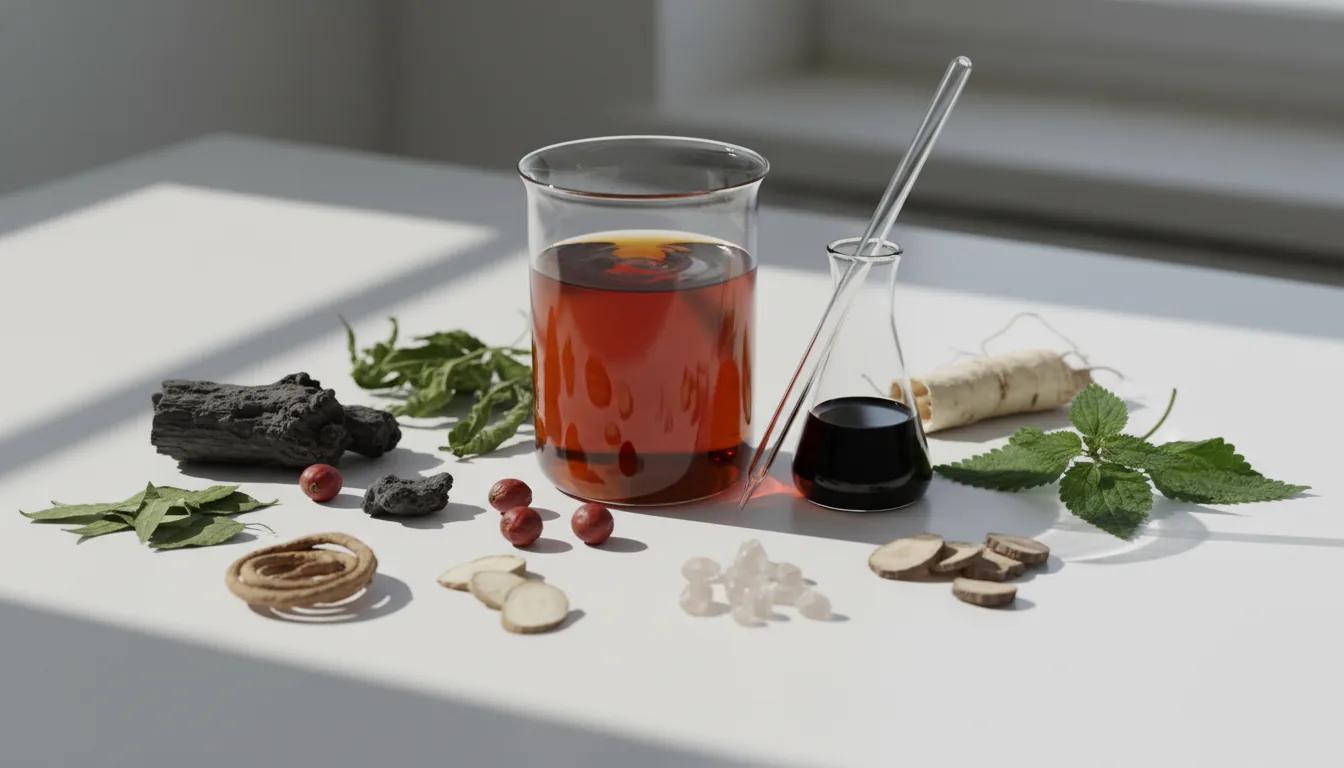
How the L-citrulline arginine blood flow pathway works
Start with the pathway, because it explains everything else. The inner lining of your blood vessels, called the endothelium, produces a gas called nitric oxide. Nitric oxide diffuses into the smooth muscle wrapped around each artery and triggers a chain that ends with that muscle relaxing. When the muscle relaxes, the vessel widens, resistance drops, and more blood flows through at a given pressure. This is the same mechanism that matters for exercising muscles, for cardiovascular health, and, yes, for the small arteries involved in an erection.
Arginine is the direct substrate. An enzyme called nitric oxide synthase takes L-arginine and oxygen and produces nitric oxide plus a leftover molecule, citrulline. So arginine is the raw material and citrulline is the by-product. Here is the elegant part: the body does not waste that by-product. The kidneys recycle citrulline back into arginine, topping the tank up again. That recycling loop is exactly why supplementing citrulline can raise arginine levels in the blood more effectively than supplementing arginine directly, which sounds backwards until you follow what happens in the gut.
The practical takeaway is that both ingredients aim at the same target, more available nitric oxide, from two different entry points. Neither one forces your body to make nitric oxide it does not want to make. They increase the supply of ingredients; the endothelium still decides how much to produce and when. That distinction is the difference between support and control, and it is the reason effects are real but modest.
Why citrulline beats arginine for absorption
If arginine is the direct substrate, why would anyone take citrulline instead? Because of what happens between your mouth and your bloodstream. Arginine taken orally runs into a wall of enzymes in the small intestine and liver, collectively called arginase, that break a large share of it down before it ever reaches general circulation. This first-pass metabolism means a hefty oral dose of arginine produces a surprisingly small and short-lived bump in blood arginine, and larger doses tend to cause stomach upset before they cause a bigger rise.
Citrulline sidesteps that gauntlet. It is absorbed efficiently, largely ignored by arginase, and then converted to arginine in the kidneys, releasing it into the blood in a slower, steadier way. Controlled comparisons have repeatedly shown that gram for gram, citrulline raises plasma arginine more than arginine itself does. That is the core reason a well-designed blood-flow formula tends to favour citrulline, or citrulline malate, over plain arginine, and why the better oral bioavailability of citrulline keeps coming up in the research.
It is worth being precise about what "better" means here. Better bioavailability does not mean a dramatic effect. It means the ingredient does the unglamorous job of reaching your bloodstream instead of being destroyed in transit. A more reliable small effect still beats an unreliable one, and that is the honest case for citrulline.
What the blood-flow studies actually found
The most quoted human result in this space is a small, short study in men with mild difficulty. Participants took 1.5 grams of L-citrulline per day. At the end, roughly half of the men, around 50 percent, reported an improvement in erection hardness, compared with about 8 percent on placebo. That gap looks striking, and it is genuinely interesting, but it needs its guardrails stated plainly. It was a small group, over a short period, using a self-reported hardness score, in men whose difficulty was described as mild. It has not been followed by the large, long trial that would turn a promising signal into a settled conclusion.
Beyond that single study, the broader literature on citrulline and arginine leans toward outcomes like exercise blood flow, blood pressure in specific populations, and vascular function markers, rather than sexual outcomes. The direction of effect is generally favourable and generally small. This is a pattern you will see across the honest end of the supplement world: a plausible mechanism, a handful of encouraging studies, and researchers themselves urging caution about the size and durability of the benefit. We take the same posture in our wider look at what male-health supplements can and cannot do for erectile health, because the gap between mechanism and outcome is where most marketing overreaches.
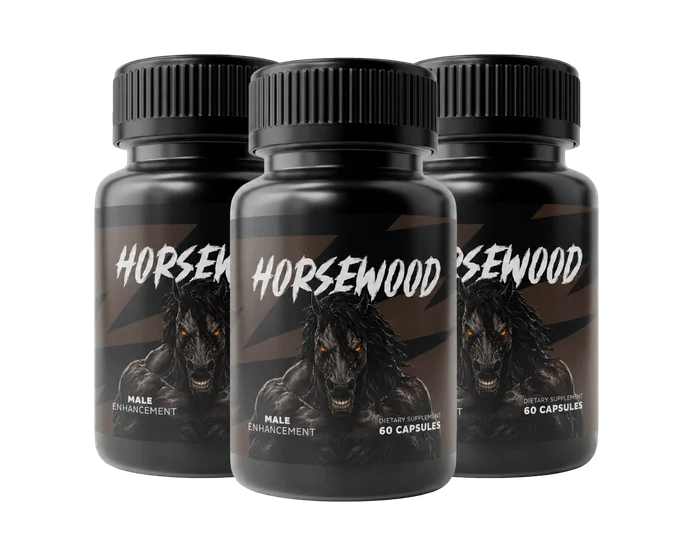
See the citrulline dose in the formula
Horsewood publishes its full per-ingredient panel with amounts, so you can hold the citrulline content against the research doses in this article instead of trusting a proprietary-blend total. Current bundles are listed on the official store.
See the Official StoreThe doses that matter, and the ones that do not
Dose is where a lot of products quietly fail. The amounts used in research are not small. Nitric-oxide-oriented studies typically use around 2.4 to 6 grams of L-citrulline per day, frequently split into a morning and evening dose to keep blood levels steadier, or roughly 1.5 to 5 grams of L-arginine when arginine is used. The 1.5 gram citrulline figure from the erection-hardness study sits at the low end and is the exception rather than the rule.
Now compare that to a blended capsule. When citrulline shares a single capsule with six or seven other extracts, the per-ingredient amount is often a fraction of a gram, which is well below anything tested. This is the single most useful check a buyer can perform: find the citrulline amount on the label and compare it to the range below. If the number is hidden inside a "proprietary blend," you cannot make that comparison, and that itself is informative.
| Ingredient | Typical study dose | What it targets | Absorption note |
|---|---|---|---|
| L-citrulline | 2.4–6 g daily (often split) | Blood arginine → nitric oxide | Good — bypasses first-pass breakdown |
| L-citrulline (hardness study) | 1.5 g daily | Self-rated erection hardness | Small dose, small short study |
| Citrulline malate | 6–8 g daily (exercise studies) | Exercise blood flow, fatigue | Citrulline bound to malate |
| L-arginine | 1.5–5 g daily | Direct nitric oxide substrate | Poor — largely broken down orally |
Read the table as a set of reference points, not a prescription. The right-hand column is the reason citrulline dominates modern formulas: an ingredient that reaches your blood at a lower dose is more useful than one that needs a large dose and mostly does not arrive.
A blood-flow ingredient that works quietly over weeks is behaving exactly as the biology predicts. Anything promising a switch-flip effect within the hour is describing a drug, a placebo, or an undeclared ingredient, not an amino acid.

Three objections worth taking seriously
"If it improves blood flow, isn't it basically a natural version of an ED pill?" No, and the difference is mechanical rather than legal wordplay. Prescription ED medication does not add nitric oxide; it blocks the enzyme that breaks down the downstream signal, amplifying a response the body is already trying to make. Citrulline and arginine sit at the opposite end of the pathway, quietly topping up raw material. One lowers the threshold for a response; the other stocks the pantry. They are not interchangeable, and only one of them is a medicine.
"More must be better, so I'll megadose arginine." This is where oral arginine disappoints. Push the dose up and the main thing you reliably increase is gastrointestinal distress, because arginase caps how much actually reaches your blood. Citrulline scales more gracefully, which is another practical point in its favour, but even there the ceiling is a supportive effect, not a dramatic one.
"A capsule can't do anything I can't get from food." Partly fair. Watermelon contains citrulline, and many foods contain arginine, and a good diet genuinely supports vascular health. The counterpoint is dose: the citrulline in a realistic serving of watermelon is far below study amounts, which is the entire rationale for a concentrated supplement. Whether that concentration is worth it depends on the dose the product actually delivers, which loops straight back to reading the label.
How citrulline and arginine sit in a botanical formula
In a blended male-vitality product, citrulline usually plays a supporting role rather than a headline one, sitting alongside botanicals aimed at desire, stress and hormone support. That is a reasonable design, provided the citrulline is dosed high enough to matter and the amount is disclosed. The failure mode is a dusting of citrulline included purely so the word can appear on the front of the box. If you want to see how a transparent formula lists it, our full walkthrough of the Horsewood ingredients label goes through each line with its amount.
None of this changes the ceiling. Citrulline and arginine support the background conditions for healthy circulation. They do not reverse arterial narrowing, they do not repair nerve damage, and they do not correct a hormone problem. Those require a clinician, not a checkout page. If a persistent change in blood flow or erectile function has crept in over months, that pattern deserves a medical conversation about blood pressure, blood sugar and cholesterol, because the smallest vessels often show trouble first.
Getting the most from a blood-flow supplement
If you have had the medical basics checked and still want to try citrulline, a few practices make the experiment fair. Dose it consistently and daily rather than only before an occasion, because the point is a steadier background level, not an acute spike. Give it a genuine trial window of eight to twelve weeks; a pathway effect this gradual cannot be judged in a weekend. Keep the rest of your vascular inputs pointed the right way, since aerobic exercise, sleep and not smoking do more for endothelial function than any amino acid, and they make the supplement's small contribution easier to notice rather than swamped.
And keep your expectations honest. The realistic outcome from the l-citrulline arginine blood flow pathway is a modest, gradual support to circulation, most convincing in men whose difficulty is mild and whose foundations are already in reasonable shape. That is a smaller promise than the category usually makes, and it is one the evidence can actually stand behind. For the wider context on where botanical blood-flow support fits, our realistic view of natural ED-support supplements puts the numbers in perspective.
Check the citrulline amount before you buy
The only useful test of a blood-flow formula is the number on the label held against the research doses above. Horsewood lists every ingredient with its amount, and the official store is the only link we carry for current bundles and pricing.
Check AvailabilityFrequently asked questions
How do L-citrulline and L-arginine support blood flow?
Both are amino acids that feed the nitric oxide pathway. Nitric oxide signals the smooth muscle in artery walls to relax, the vessels widen, and blood flow increases. Arginine is the direct raw material the body converts into nitric oxide, and citrulline is recycled back into arginine inside the kidneys, which is why supplementing either one aims to raise the amount of nitric oxide your blood vessels can produce.
Which one absorbs better?
L-citrulline absorbs better in practical terms. Arginine taken by mouth is largely broken down by enzymes in the gut and liver before it reaches the bloodstream, so a large oral dose produces a surprisingly small rise in blood arginine. Citrulline slips past that first-pass breakdown and is then converted to arginine in the body, so gram for gram it raises blood arginine more reliably than arginine itself.
What dose is used in studies?
Human studies typically use around 2.4 to 6 grams of L-citrulline per day, often split into two doses, or roughly 1.5 to 5 grams of L-arginine. One small study in men with mild difficulty used 1.5 grams of citrulline daily. These are the amounts to compare a product against, because a blended capsule frequently contains far less than a research dose.
Are these a substitute for ED medication?
No. Neither amino acid is a treatment for erectile dysfunction, and a dietary supplement is not permitted to claim it treats a medical condition. Prescription ED medication works on the final step of the nitric oxide pathway to amplify a signal, while citrulline and arginine only supply raw material upstream. If erections have changed persistently, a doctor's assessment is the right first step, not a supplement.
Related reading
References
- PubMed — Cormio et al., oral L-citrulline supplementation improves erection hardness in men with mild erectile dysfunction (Urology, 2011)
- PubMed — Schwedhelm et al., pharmacokinetic and pharmacodynamic properties of oral L-citrulline and L-arginine (Br J Clin Pharmacol, 2008)
- PubMed — effects of acute citrulline malate supplementation on exercise performance: a randomised, double-blind trial (Nutrients, 2024)
- NIH Office of Dietary Supplements — Amino acid supplement fact sheets
- Mayo Clinic — Erectile dysfunction: vascular causes and when to see a doctor
About Horsewood, the product this site covers
Horsewood is a two-a-day gelatin capsule sold for male vitality, carrying seven openly dosed ingredients — tongkat ali, horny goat weed, saw palmetto, wild yam, sarsaparilla, nettle leaf and boron amino acid chelate — at 60 capsules a bottle. Our Horsewood ingredients, price and official website guide reads the Supplement Facts panel line by line and compares each amount with the amount its supporting trial actually used. The rest of this research library is indexed on the Horsaewood evidence blog.
Affiliate disclosure (FTC 16 CFR Part 255). Horsaewood Media is an independent publisher, not the manufacturer or seller. Links marked “Get Offer” are affiliate links: if you buy through one we may earn a commission at no extra cost to you, and that commission has not changed what this article says about the evidence. FDA statement. These statements have not been evaluated by the Food and Drug Administration. Dietary supplements are not intended to diagnose, treat, cure or prevent any disease. This article is information, not medical advice — see our medical disclaimer.